Early consumer sleep trackers relied mainly on wrist-based motion sensors to estimate sleep and wake periods.
Advances in biosensing added heart rate and heart rate variability to improve the detection of sleep phases.
Artificial intelligence systems now analyze multiple physiological signals simultaneously to classify sleep patterns.
What AI Monitoring Systems Actually Measure
AI sleep systems do not directly measure brain waves unless they use medical-grade electroencephalography equipment.
Most consumer devices estimate sleep stages by interpreting movement, heart rate, and respiratory patterns.
Algorithms are trained on datasets labeled against polysomnography to approximate sleep architecture.
The outputs are statistical predictions rather than direct physiological measurements of neural activity.
Core Sensors Used in Wearables
Accelerometers detect body movement and help determine when you are likely asleep or awake.
Photoplethysmography sensors estimate heart rate by detecting blood flow changes beneath the skin.
Some advanced wearables incorporate skin temperature and oxygen saturation for additional context.
Each added sensor can refine estimates, but still depends on algorithm quality and validation.
Nearable and Contactless Devices
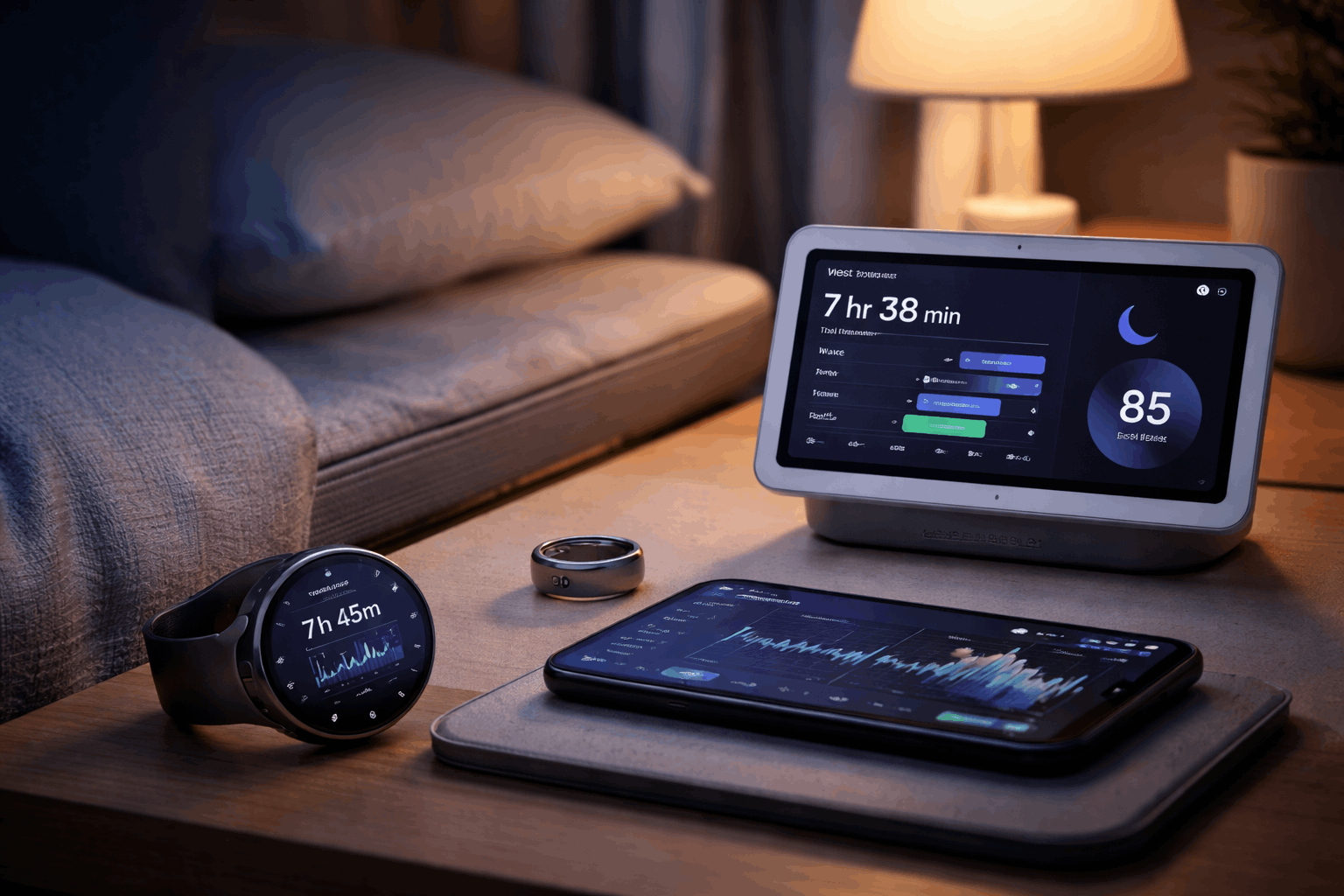
Under-mattress and bedside devices monitor subtle body vibrations linked to breathing and heartbeats.
These systems often use ballistocardiography-like signals to estimate physiological rhythms.
Contactless tracking increases comfort but may introduce environmental interference or signal noise.
Accuracy varies depending on mattress type, body position, and proximity to the sensor.
How Machine Learning Classifies Sleep Stages
AI models divide sleep data into short time segments that mirror clinical scoring intervals.
Features such as heart rate variability and movement frequency are extracted from each segment.
Supervised learning algorithms compare these features to labeled training data.
Deep learning approaches sometimes analyze raw signal patterns without manual feature engineering.
Validation Against Clinical Standards
Reliable sleep systems are tested against polysomnography in controlled research environments.
Peer-reviewed validation studies compare predicted sleep stages with clinically scored data.
Performance metrics often include sensitivity, specificity, and overall agreement rates.
Results can vary across age groups, health conditions, and usage environments.
Regulatory Oversight and Medical Claims
Wellness devices typically do not undergo the same regulatory review as medical devices.
Features intended to detect health risks may require clearance from regulatory authorities such as the FDA.
Regulatory documents specify intended use and limitations for approved features.
Even cleared tools are not replacements for comprehensive clinical evaluation.
Sleep Apnea Risk Notifications
Some wearable devices provide notifications suggesting possible breathing irregularities during sleep.
These features analyze patterns associated with oxygen drops and disrupted breathing cycles.
Notifications are screening prompts rather than confirmed medical diagnoses.
Persistent symptoms should be discussed with a qualified healthcare professional.
Accuracy Limits and Individual Variability
Algorithm performance can change depending on how tightly a device is worn.
Skin tone, body composition, and movement patterns may influence sensor readings.
Irregular sleep schedules or medical conditions can reduce classification accuracy.
No consumer tracker guarantees precise staging for every individual night.
Interpreting Sleep Scores and Trends
Sleep scores aggregate multiple metrics into simplified summaries for daily feedback.
Trend analysis over weeks is often more meaningful than focusing on single-night fluctuations.
Improving bedtime consistency and sleep opportunity can positively influence reported metrics.
Behavior changes should be guided by overall patterns rather than isolated numbers.
Data Privacy and Security Considerations
Sleep data can reveal sensitive information about routines and potential health conditions.
Cloud storage practices vary between companies and may affect data exposure risks.
Users should review privacy policies to understand how personal information is processed.
Transparent governance practices increase trust in AI-based monitoring systems.
Ethical and Algorithmic Transparency
Responsible AI development includes documenting training datasets and testing populations.
Bias may occur if datasets do not represent diverse age, gender, or health profiles.
Clear communication of limitations prevents overreliance on automated interpretations.
Transparency allows consumers to make informed decisions about device selection.
Integration with Digital Health Ecosystems
Many trackers sync with smartphone apps that aggregate wellness data.
Integration with health platforms enables sharing information with clinicians if desired.
Interoperability can improve longitudinal analysis of sleep and lifestyle factors.
However, system compatibility and data formats differ between manufacturers.
Practical Guidance for Responsible Use
Define your goal before choosing a device, whether improving routine or discussing symptoms with a doctor.
Look for products supported by peer-reviewed validation studies against clinical standards.
Use sleep data to support healthy habits rather than self-diagnose complex disorders.
Seek professional medical advice if you experience persistent insomnia, loud snoring, or excessive daytime sleepiness.
List of Sleep Tracking Technology AI
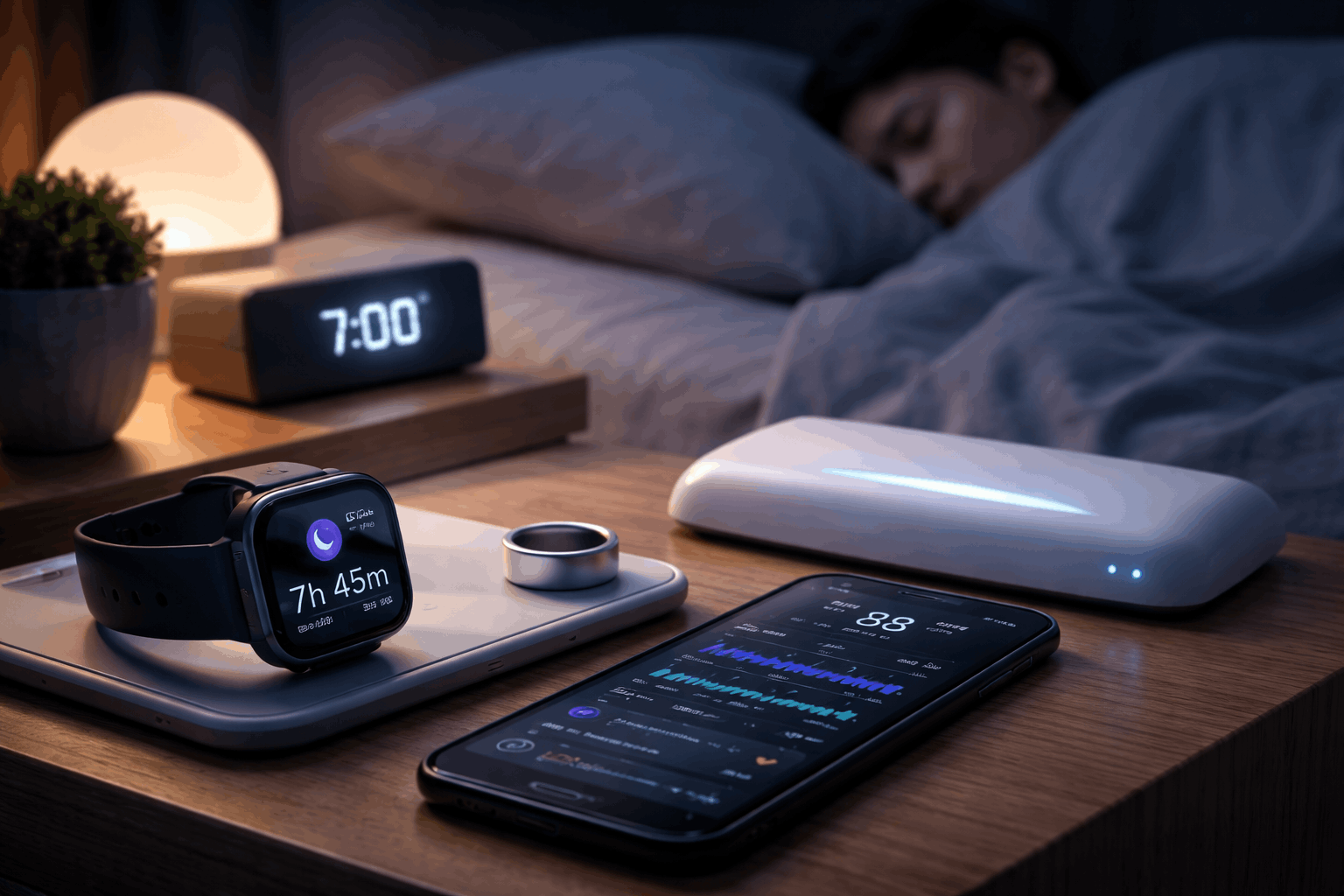
Here’s a list of AI-based sleep tracking technologies and systems.
Includes consumer devices, research platforms, and software tools that use artificial intelligence to monitor or analyze sleep patterns:
- Sleeptracker-AI® Platform – A deep-learning sleep analysis and monitoring system used in clinical and wellness applications that analyzes sleep stages and environmental data.
- Sleep Sense by Sleep.ai – AI-powered sleep measurement that works without wearables, using smartphone signals and machine learning to determine sleep boundaries.
- Oura Ring (e.g., Oura Ring 4) – Wearable ring with sensors and AI-based algorithms to estimate sleep stages, heart rate, and respiration.
- Fitbit Sense / Fitbit Wearables – Smartwatches with AI-assisted sleep detection using heart rate variability and movement data to estimate sleep quality and cycles.
- Withings Sleep Analyzer – A mat-style sensor that uses AI to detect sleep stages and potential breathing disturbances such as sleep apnea.
- Google Nest Hub (2nd Gen) – A contact-free sleep tracker using Motion Sense radar and AI algorithms to monitor night motion and breathing.
- Smart Rings (e.g., Ultrahuman Ring AIR, Go2Sleep 3) – Wearable rings that collect biosignals (heart rate, oxygen saturation) and feed them to AI models for sleep insight generation.
- AI Headbands for Sleep (general category) – Wearable headbands that collect brain activity or movement to classify sleep phases using AI models.
Research & Emerging AI Sleep Technologies
- Stanford’s SleepFM AI Model – A large AI model trained on extensive polysomnography datasets to understand sleep physiology and predict patterns.
- Transformer-Based Sleep Analysis Models – AI systems developed in research settings that interpret comprehensive sleep signals (EEG, cardiac, and respiratory) for sleep staging.
- Explainable AI Sleep Devices (Vanderbilt research) – Novel multimodal wearable systems combining multiple biosignals with AI for improved sleep stage detection and disorder screening.
- RestAware Radar Sleep Monitoring – A contactless AI sleep tracking prototype using low-power radar to classify movements and generate human-readable sleep summaries.
Conclusion
Sleep tracking technology continues to evolve through advances in sensing and artificial intelligence.
Despite these advances, clinical polysomnography remains the gold standard for diagnosing sleep disorders.